
How Streaming Services Are Changing the Way We Watch Movies
Ten years ago, watching a new movie meant either driving to a theater or waiting months for a DVD release. Today, a film can appear on your television the same day it premieres — or sometimes instead of premiering anywhere else at all. That shift isn't just about convenience. It's quietly rewriting the rules of how movies get made, distributed, and experienced.
From the Theater to the Living Room: A Shift in Viewing Culture
The move from theatrical moviegoing to home entertainment has been the defining media transition of the past decade. Streaming platforms have made the living room a primary venue for film consumption, fundamentally altering when, where, and how often people engage with movies.
For most of the 20th century, seeing a film meant leaving the house. The cinema was an event — a social ritual with a shared audience, a darkened room, and no pause button. That experience carried cultural weight. Going to the movies was something you did together.
Streaming didn't just offer an alternative to that experience. It offered something structurally different: total control over the viewing environment. You choose the screen size, the sound level, the moment you start, and whether you finish. That autonomy has proven enormously appealing, especially for households with children, irregular schedules, or limited access to cinemas.
The numbers reflect the shift. Global cinema attendance has never fully recovered to pre-2020 levels, and while blockbusters still draw crowds, mid-budget dramas and comedies — the kind of films that once filled multiplexes — have largely migrated to streaming. The theater is increasingly reserved for spectacle. Everything else comes home.
The Rise of On-Demand: Watching What You Want, When You Want
On-demand viewing has fundamentally changed viewer expectations: audiences now expect instant access to any film, at any time, without scheduling their lives around broadcast windows or theatrical runs.
This sounds obvious in 2026, but it represents a profound behavioral shift from even fifteen years ago. Linear television trained audiences to watch what was on, when it was on. Miss it? Wait for a rerun. Streaming inverted that entirely. The content library waits for you.
The practical consequences are significant. Viewers no longer feel urgency around release dates. A film released six months ago is as accessible as one released yesterday. This has changed how people talk about movies — the shared cultural moment of "did you see it opening weekend?" has been replaced by a more fragmented, asynchronous conversation where everyone is at a different point in the same catalog.
It's also changed what counts as a successful film. Streaming platforms measure engagement differently than box offices do. A movie that generates sustained viewing over months may be considered more valuable than one that spikes and disappears. That metric shift has real consequences for which films get greenlit.
Binge-Watching and the New Rhythm of Storytelling
Binge-watching — consuming multiple episodes or films in a single sitting — has reshaped how stories are structured and how audiences relate to them. While bingeing is most associated with serialized TV, it has influenced film consumption and production in measurable ways.
Streaming platforms have blurred the line between film and long-form television. Some streaming originals are released as multi-part films. Others are structured as limited series that function more like extended movies. The traditional 90-to-120-minute feature film format remains dominant, but the context around it has changed — viewers often watch two or three films in a row, something that would have been logistically unusual in the theatrical era.
Storytelling has responded. Films designed for streaming tend to favor immediate engagement over slow-burn setups. The first ten minutes matter more when a viewer can switch to something else with a single click. This has pushed some filmmakers toward faster pacing and higher-stakes openings — a creative pressure that doesn't always serve the story.
Whether that's a loss or simply an adaptation depends on your perspective. Streaming has given certain kinds of films — quieter character studies, foreign-language cinema, documentary features — audiences they never would have found theatrically. That's a genuine gain for film culture, even if some traditional cinematic rhythms have been compressed in the process.
How Streaming Is Reshaping Film Production and Distribution
Streaming has restructured the economics of film production by compressing or eliminating the traditional theatrical window — the exclusive period during which a film plays only in cinemas before becoming available on home video or streaming.
Historically, that window lasted 90 days or longer. It was the economic foundation of the theatrical release model. Streaming platforms, particularly those producing their own content, have aggressively shortened or bypassed it entirely. Some major studios now release films to streaming within 30-45 days of theatrical debut. Others skip theaters altogether for certain titles.
The growth of streaming originals has been the most visible sign of this shift. Platforms have invested heavily in producing films exclusively for their services — bypassing traditional studio distribution entirely. Some of these films have earned critical recognition and awards consideration, which has forced the industry to reckon with what "theatrical" even means as a qualifier for prestige.
For studios, the calculus is complex. A theatrical release builds cultural visibility and marketing momentum. But streaming distribution offers guaranteed placement in front of a large subscriber base without the risk of a weak opening weekend. Choosing between them isn't ideological — it's financial, and the math keeps shifting.
Algorithm Culture: How Recommendations Are Guiding What We Watch
Algorithm-driven recommendations now function as the primary discovery mechanism for most streaming viewers — replacing word-of-mouth, film critics, and curated programming as the main way people find movies to watch.
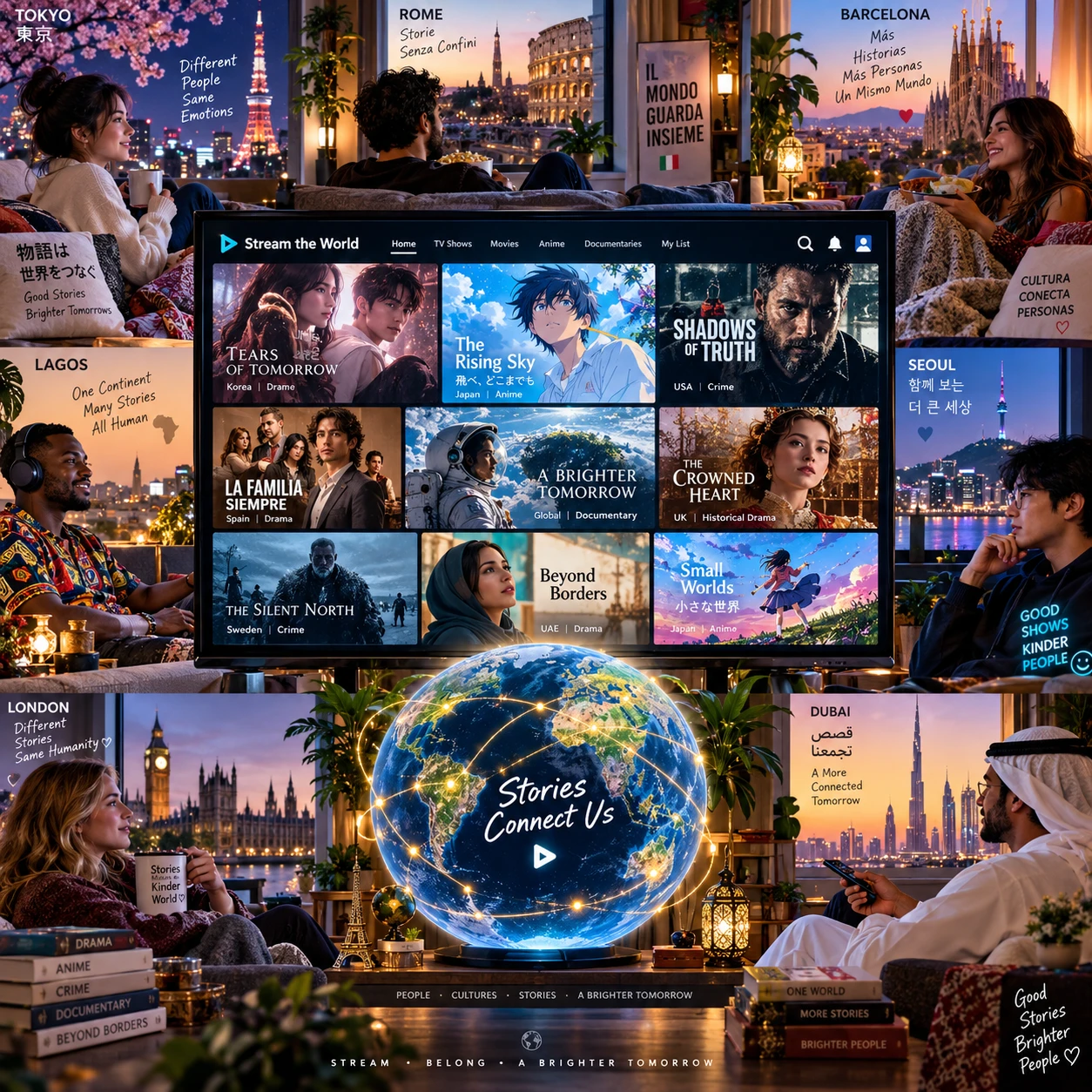
This is one of the most underappreciated changes in contemporary film culture. When you open a streaming platform, the interface is personalized. What appears at the top of your screen reflects your viewing history, completion rates, and behavioral patterns. Two people with different tastes open the same app and see almost entirely different catalogs — even though they have access to the same content library.
The implications for film visibility are significant. A movie that performs well algorithmically — high completion rates, strong engagement signals — gets surfaced to more users. One that underperforms disappears into the catalog, regardless of its critical merit. This creates a feedback loop where accessible, broadly appealing films accumulate viewers, while challenging or unconventional work struggles for discovery.
There's also the question of what gets produced in the first place. Platforms with sophisticated viewing data know which genres, tones, and narrative structures their audiences respond to. That data inevitably influences commissioning decisions. The result is a content ecosystem shaped partly by algorithmic feedback — which raises genuine questions about creative diversity over time.
The Downside: Subscription Fatigue and the Fragmented Landscape
The streaming era has a real cost: subscription fatigue. With major platforms each holding exclusive content, viewers who want comprehensive access face a monthly bill that can rival — or exceed — what cable once cost.
The promise of cord-cutting was simplicity and savings. In practice, the fragmentation of content across competing services has recreated much of cable's complexity. A film might be available on one platform in one country and a different one elsewhere. Exclusive windows shift. Catalogs shrink as licensing deals expire. Content that was available last month may be gone today.
This creates a specific frustration: the feeling that you're paying for access to everything while actually accessing only a fraction of what you want. Research consistently shows that viewers rotate subscriptions — subscribing to one platform, consuming its content, then canceling and moving to another. Platforms have responded with tactics designed to reduce churn, including releasing anticipated titles in weekly installments rather than all at once.
Content overload is a related problem. The sheer volume of films available on any major platform is genuinely overwhelming. Without strong curation or a specific goal, many viewers spend more time browsing than watching — a phenomenon sometimes called "decision paralysis." The irony of having access to thousands of films and struggling to choose one is a distinctly modern viewing experience.
What the Future of Movie Watching Might Look Like
The future of film consumption will likely be a hybrid model — theatrical releases for event films, streaming for everything else — with the boundary between those categories continuing to shift based on economics and audience behavior.
A few trends are already visible. Premium theatrical experiences — large-format screens, immersive sound, luxury seating — are growing as a way to differentiate cinema from home viewing. Theaters are leaning into the things streaming can't replicate: scale, communal atmosphere, and the social experience of watching something together with strangers.
At the same time, home entertainment technology keeps improving. The gap in audio-visual quality between a well-equipped home setup and a mid-tier multiplex has narrowed considerably. For many viewers, the calculus of comfort, cost, and convenience tilts decisively toward home.
What seems clear is that the idea of a single dominant format — everyone going to the theater, everyone watching the same channel — is gone. The film industry is navigating a landscape where audience attention is fragmented, distribution is multi-channel, and the definition of "watching a movie" has expanded to include a dozen different contexts and devices. That complexity isn't going away. If anything, it's the permanent condition of film culture now.
Frequently Asked Questions
Are streaming services hurting movie theaters?
Streaming has unquestionably reduced theatrical attendance for certain types of films — particularly mid-budget dramas, comedies, and smaller releases that now go directly to platforms. However, large-scale blockbusters and franchise films continue to perform strongly in cinemas. The theatrical experience hasn't disappeared; it's become more selective, reserved primarily for films that benefit from a big screen and shared audience.
Why do some movies skip theaters and go straight to streaming?
Films skip theatrical release for several reasons: the production was commissioned directly by a streaming platform, the studio calculated that streaming distribution would be more profitable given the film's audience profile, or the theatrical market in a given region is too small to justify the cost of a full release. It's a financial decision more than an artistic one, though it does affect how a film is perceived and promoted.
What is a theatrical window and how has it changed?
A theatrical window is the period during which a film is exclusively available in cinemas before being released on home video or streaming. Traditionally 90 days or longer, this window has compressed significantly in the streaming era. Many studios now release films to streaming within 30-45 days of theatrical debut, and some bypass the theatrical window entirely for certain titles.
Is it better to watch movies in theaters or on streaming platforms?
Neither format is objectively better — they serve different purposes. Theaters offer scale, immersion, and a communal experience that streaming can't replicate. Streaming offers convenience, comfort, and access to a vast catalog on your own schedule. For visually spectacular films, the theatrical experience often enhances the work. For quieter, dialogue-driven films, the difference is less significant. The right choice depends on the film and what you're looking for from the experience.
How do streaming algorithms decide what movies to recommend?
Streaming recommendation algorithms analyze viewing history, completion rates, ratings, time of day, device type, and behavioral patterns to predict what a viewer is likely to watch next. They also factor in what similar users have watched and engaged with. The result is a personalized content feed that surfaces films the platform believes you'll complete — which prioritizes engagement over critical quality or creative diversity.