
The Impact of Binge-Watching on Storytelling and TV Show Structure
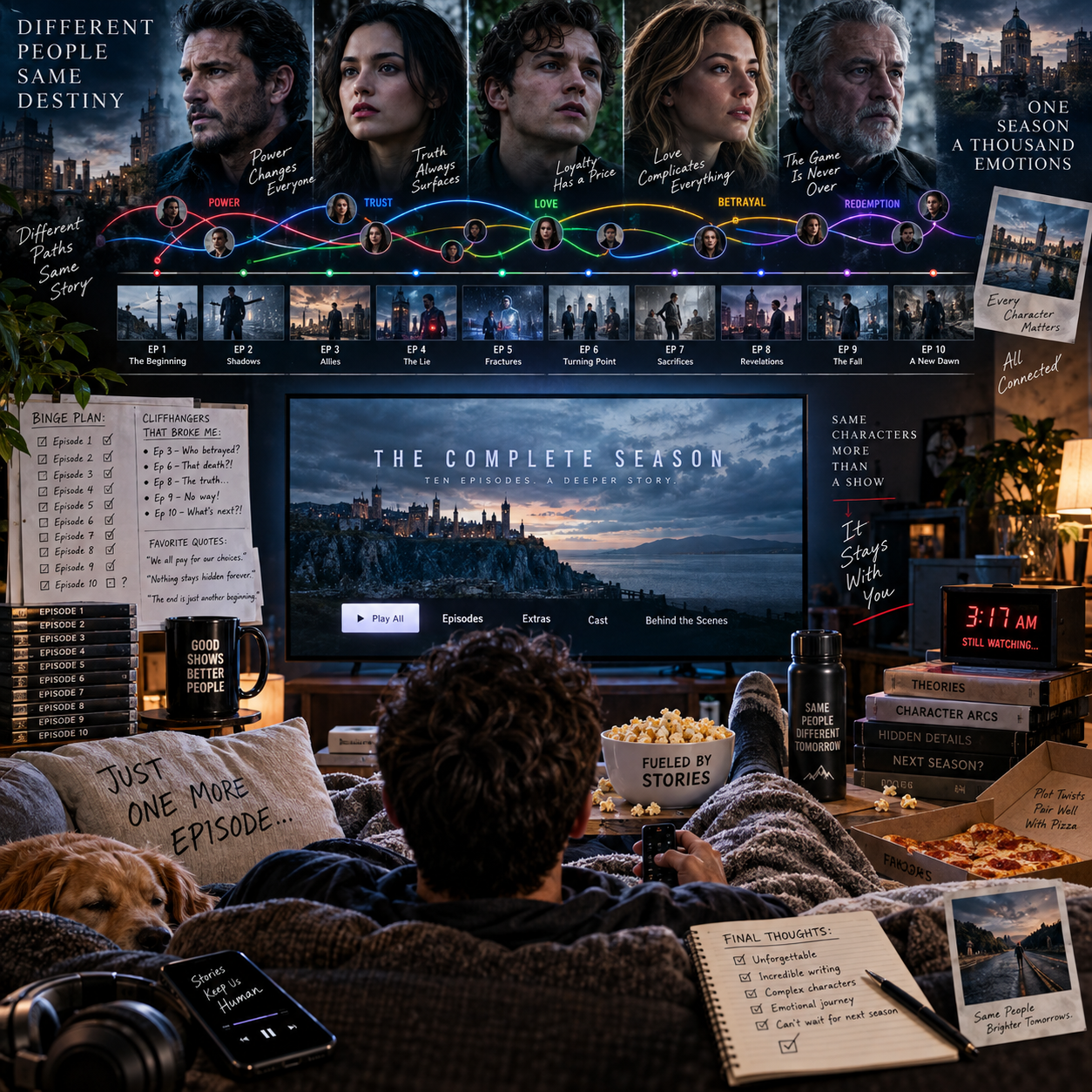
Binge-watching has changed more than when audiences watch television. It has influenced how writers build episodes, how producers shape season arcs, and how viewers experience serialized television. When several episodes are available at once, a show can behave less like a collection of separate installments and more like one extended narrative divided into chapters.
The shift has also created new creative tensions. Streaming platforms give audiences immediate access and allow stories to move quickly, yet weekly releases preserve anticipation, discussion, and time for reflection. The result is a television landscape where episodic storytelling now serves two viewing rhythms: the uninterrupted marathon and the traditional appointment with a new episode.
How Binge-Watching Changed the Television Viewing Experience
Binge-watching changed television by replacing scheduled access with immediate, uninterrupted viewing. Instead of waiting seven days between episodes, audiences can often move from one chapter to the next within seconds, allowing the story’s emotional and dramatic momentum to remain intact.
The weekly release model once gave each episode a defined place in the viewer’s calendar. That gap created anticipation, but it also required people to remember subplots, relationships, and clues. Streaming platforms reduced that distance. A character’s decision in episode two can be followed immediately by its consequences in episode three, making cause and effect feel sharper.
This format also changes the viewer’s role. Audiences can choose their own pace, pause to discuss a scene, or watch an entire season over a weekend. However, immediate access can compress the viewing experience. A reveal that might have dominated conversation for a week can disappear beneath the next episode within minutes.
The change is visible in the way television is discussed. Weekly shows encourage speculation, recaps, fan theories, and social-media conversation between installments. Binge releases encourage spoiler avoidance and rapid reactions, often making the complete season the primary unit of discussion rather than the individual episode.
From Standalone Episodes to Serialized Storytelling
Binge-friendly series rely more heavily on serialized storytelling, where connected episodes develop one continuing conflict or season-long transformation. Each episode still has its own dramatic shape, but its meaning often depends on what came before and what follows.
Traditional television frequently balanced self-contained episodes with longer arcs. A crime procedural, for example, might resolve its central case before the credits while advancing a relationship or mystery in the background. That structure helped viewers return after a missed episode. Binge-oriented series can assume a higher level of continuity because the next installment is readily available.
As a result, writers can delay answers, introduce layered subplots, and build season arcs with fewer reminders. A minor detail in an early episode may become important several hours later. This creates satisfying long-form design, especially in dramas, mysteries, fantasy series, and character-led comedies.
There is a trade-off. When every episode functions mainly as a bridge to the next, individual chapters may feel incomplete. The story can gain momentum while losing the distinctive identity of an episode. Strong serialized television solves this problem by giving each installment a local purpose, such as forcing a decision, revealing new information, or changing a relationship.
In practical terms, binge-friendly writing often follows a three-level structure:
- Scene level: a moment creates a question, conflict, or emotional turn.
- Episode level: several scenes produce a meaningful shift, even if the larger problem remains unresolved.
- Season level: the connected episodes transform the central characters and settle the main arc.
The New Role of Pacing, Cliffhangers, and Episode Structure
Binge-watching encourages faster pacing, fewer repeated explanations, and cliffhangers designed to trigger immediate continuation. Since viewers do not need to wait a week, an episode can end at a point of maximum uncertainty without providing as much closure.
Weekly television often used a rhythm of setup, escalation, climax, and partial resolution. The conclusion needed to reward the current audience while leaving enough tension for the next broadcast. Streaming series can place a major revelation or abrupt reversal at the end of an episode and trust the next installment to deliver the payoff almost immediately.
This does not mean every streaming show moves quickly. Some use long pauses, quiet character scenes, or deliberately slow world-building. The difference is that the overall pacing can be more varied because the audience controls the interval between episodes. A reflective episode may feel more effective when followed instantly by a tense one, while the same episode could seem slow during a seven-day wait.
Episode length has also become more flexible. Many streaming dramas move beyond the traditional broadcast hour, while others use short episodes that work like compact narrative bursts. Without a fixed commercial schedule, writers have more room to let a story determine its duration. That freedom can produce focused episodes, but it can also create uneven seasons when scenes are not edited with discipline.
Cliffhangers now serve two purposes. They can pose a direct question, such as whether a character survived, or create an emotional disturbance that makes the viewer want immediate context. The strongest examples arise from character choices. A shock alone may encourage one more episode; a consequential decision can sustain an entire season.
Effects on Character Development and World-Building
Binge-watching can deepen character development because viewers experience changes in close succession, but it can also make gradual growth feel less visible. Relationships, rivalries, and personal transformations become easier to follow when episodes arrive without long interruptions.
Consecutive viewing gives writers space to show small behavioral shifts. A character may begin by avoiding responsibility, make a compromise several episodes later, and finally accept a difficult obligation near the season finale. When watched together, those steps form a clear emotional line. The viewer remembers the original flaw and notices the accumulated pressure that produces change.
World-building benefits from the same continuity. Fantasy, science-fiction, and historical series can introduce rules, institutions, locations, and political conflicts across multiple episodes. Because audiences can continue immediately, writers do not need to repeat every piece of information at the start of each installment.
Yet dense storytelling can overwhelm viewers. A large ensemble cast may introduce several motivations at once, and binge-watching can blur secondary characters together. The absence of a weekly pause also reduces the time audiences have to interpret symbolism or debate competing theories.
A useful test for character-driven series is the memory test: after each episode, can the viewer identify what changed for the central character? If the answer is no, the season may be adding events without building development. Binge-watching exposes this weakness quickly because the audience moves through the material before individual moments have time to disguise structural repetition.
Binge-Watching Versus the Traditional Weekly Release Model
The main difference is timing: binge releases maximize narrative momentum, while weekly releases maximize anticipation and shared discussion. Neither format is automatically better; each creates different conditions for storytelling and audience engagement.
| Feature | Binge release | Weekly release |
|---|---|---|
| Pacing | Supports continuous momentum and rapid escalation | Allows deliberate pauses between major developments |
| Cliffhangers | Encourage immediate viewing of the next episode | Support speculation during the wait |
| Audience memory | Reduces the need to remember long gaps | Rewards active recall and ongoing attention |
| Conversation | Often concentrates around the full season | Develops episode by episode |
| Story structure | Favors continuous arcs and flexible length | Often gives each episode stronger independent shape |
Weekly television gives stories room to breathe culturally. Viewers can form theories, read recaps, and compare interpretations before the next chapter arrives. That delay can make a mystery feel larger. It also protects audiences from accidentally consuming a major twist before they have seen the relevant episode.
Binge releases create a different kind of immersion. Character relationships remain fresh, and complicated plots are less likely to lose emotional force between episodes. The limitation is that the season may become a short-lived event rather than a sustained conversation.
Hybrid schedules attempt to combine both strengths. A platform may release two or three episodes together, then move to a weekly pattern. This approach preserves early momentum while creating time for discussion and anticipation later in the season.
Benefits and Drawbacks for Writers, Producers, and Viewers
Binge-watching gives storytellers more structural freedom, but it also increases the risk of fatigue, uneven pacing, and episodes that feel interchangeable. The same format can benefit one part of the production process while creating difficulties elsewhere.
Benefits
- Greater narrative continuity: Writers can build season arcs without repeating background information in every episode.
- Flexible episode length: Scenes can be shaped around dramatic needs instead of a rigid broadcast slot.
- Stronger immersion: Viewers can follow emotional and plot developments without a long interruption.
- More ambitious world-building: Complex settings can unfold gradually across a connected season.
Drawbacks
- Reduced episode identity: Chapters may feel like sections of one long film rather than satisfying individual stories.
- Viewer fatigue: Repeated high-stakes endings can make tension feel mechanical instead of earned.
- Shorter reflection cycles: Audiences have less time to process themes, clues, and character decisions.
- Uneven season design: Flexible formats can encourage overlong scenes or subplots that would have been cut in broadcast television.
For writers, the key challenge is balancing momentum with shape. A season should reward continued viewing, but each episode still needs a clear dramatic purpose. For producers, flexible structure can support unusual stories, although it makes consistency more important. Viewers gain control over their schedule, yet that control can turn a carefully paced story into a blur of plot points if every installment is consumed without a pause.
What the Future of TV Storytelling May Look Like
The future of TV storytelling will likely combine binge-friendly serialization with selective weekly releases. Streaming platforms have shown the appeal of immediate access, while audience discussion has demonstrated the value of giving major episodes time to become cultural events.
Hybrid distribution may become especially useful for shows with complex mysteries or large ensemble casts. Early episodes can establish momentum, then later installments can arrive weekly so viewers have time to analyze clues and debate possible outcomes. This schedule also encourages stronger episode design because each chapter must stand up as a separate event.
Story structure may become more deliberately modular. Writers can create episodes that work as part of a continuous season while still offering a beginning, middle, and end at the local level. That design serves viewers who binge the series and those who prefer to watch at a slower pace.
Audience habits will continue to shape the process, but technology is only part of the equation. The most durable shows will understand when a story needs acceleration and when it benefits from silence, uncertainty, or a week of speculation. Binge-watching changed the available rhythm of television; it did not eliminate the value of rhythm itself.
Frequently Asked Questions About Binge-Watching and TV Structure
How does binge-watching affect TV show pacing?
Binge-watching often supports faster plot progression because viewers can continue immediately. It also allows episodes to vary in speed, since a quiet chapter can lead directly into a more dramatic one without a week-long wait.
Are streaming shows structured differently from weekly television series?
Often, yes. Streaming shows usually depend more heavily on serialized storytelling, connected episodes, season arcs, and flexible episode lengths. Weekly series more commonly give each episode a self-contained conflict or resolution.
Does binge-watching improve or weaken character development?
It can do either. Consecutive viewing makes gradual changes easier to trace, but rapid consumption may cause subtle emotional shifts to pass unnoticed. Strong character development still depends on meaningful choices and consequences.
Why do streaming shows use cliffhangers differently?
Streaming cliffhangers usually encourage immediate continuation, while weekly cliffhangers must sustain curiosity for several days. Streaming writers can delay resolution longer because the next episode is already available.
Will weekly releases and binge releases continue to coexist?
Yes. Binge releases suit immersive, continuous viewing, while weekly releases support anticipation, theories, and shared cultural conversation. Hybrid schedules can combine both approaches for the same series.